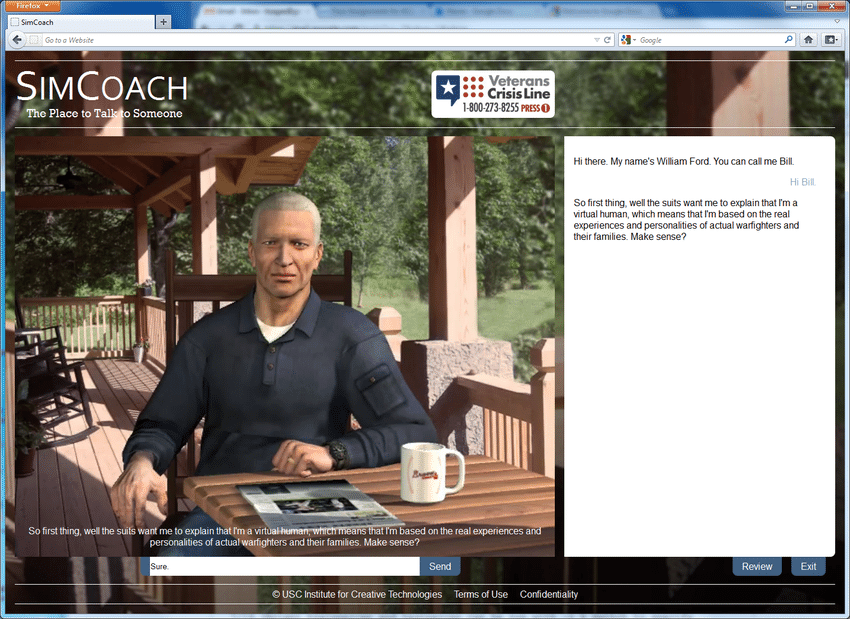
BILL FORD | SIM COACH
BUILDING TRUST THROUGH VIRTUAL HUMANS BEFORE GENERATIVE AI
SimCoach × USC ICT
Virtual Human Research for Veteran Mental Health Support
Long before today's AI assistants and conversational avatars, researchers were exploring a fundamental question:
Could a virtual human create enough trust for people to discuss sensitive personal issues? SimCoach was an early research
initiative designed to answer that question by helping military veterans access mental health resources through conversational digital characters.
Working with USC's Institute for Creative Technologies, I helped redesign and refine one of the project's virtual humans,
focusing on character appeal, facial performance, and emotional accessibility.
The goal was not simply to improve the technology, but to create a character veterans would feel comfortable engaging with.
Year: 2010
Client:U.S. Army
Developer: USC Institute for Creative Technologies
Project: SimCoach
Character: Bill Ford
Industry: Virtual Humans / Healthcare
Technology: ICT Virtual Human Toolkit, Natural Language Processing, Dialogue Systems
Role: Character Specialist
Virtual Human Design for Veteran Mental Health Support

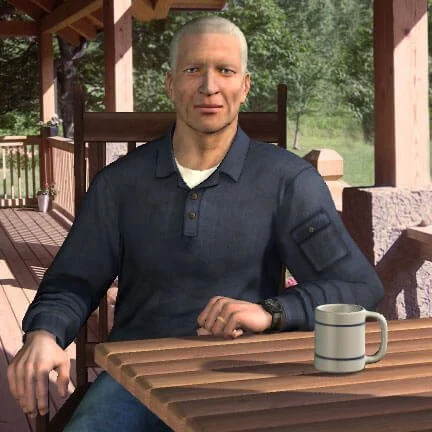
Before / After Comparison
Redesigned the visual appearance and facial performance of a virtual human developed by USC's Institute for
Creative Technologies to create a more approachable and trustworthy conversational experience for military veterans.
SIMCOACH: MAKING A VIRTUAL HUMAN MORE HUMAN
Long before large language models and AI assistants became mainstream, researchers explored a fundamental question: Can a digital character build enough trust for people to discuss difficult personal issues? SimCoach was one of the earliest large-scale attempts to answer that question.
SimCoach was a virtual human research project developed at USC's Institute for Creative Technologies under the leadership of Dr. Albert "Skip" Rizzo. The project explored how conversational virtual humans could help military veterans access mental health resources and support services.
The Challenge
Create a virtual human that veterans would feel comfortable talking to about sensitive personal issues. The original character felt intimidating and emotionally distant, creating a barrier to trust and engagement.
My Contribution
Redesigned the character's appearance and visual presentation
Refined facial expressions and speech performance
Improved facial animation quality and believability
Collaborated with researchers and engineers to enhance character performance
Developed a more approachable and trustworthy visual personality
The Transformation
Bill Ford evolved from a technical prototype into a virtual human who felt approachable, credible, and human. Through character redesign, refined facial performance, and subtle acting choices, the experience became more welcoming and emotionally accessible for veterans seeking information and support.
Why It Matters
Technology can start the conversation.
Character design and appeal determine whether people want to keep it going.
INDUSTRY IMPACT
SimCoach showed that virtual humans could build trust and encourage meaningful conversations about sensitive topics. Years before today's AI assistants and conversational avatars, the project explored how digital characters could support human connection, laying important groundwork for modern virtual humans, digital assistants, and AI-driven interactions.