Sim Coach
Making a Virtual Human More Human
Designing Trust for Digital Humans
USC Institute for Creative Technologies
Character Design & Facial Performance for Virtual Humans
SimCoach: Making a Virtual Human More Human
Year: 2010
Client: US ARMY
Role: Character Specialist
Project: SimCoach
Developed By: USC Institute for Creative Technologies
Project Director: Dr. Albert "Skip" Rizzo
Virtual Human Design for Veteran Mental Health Support
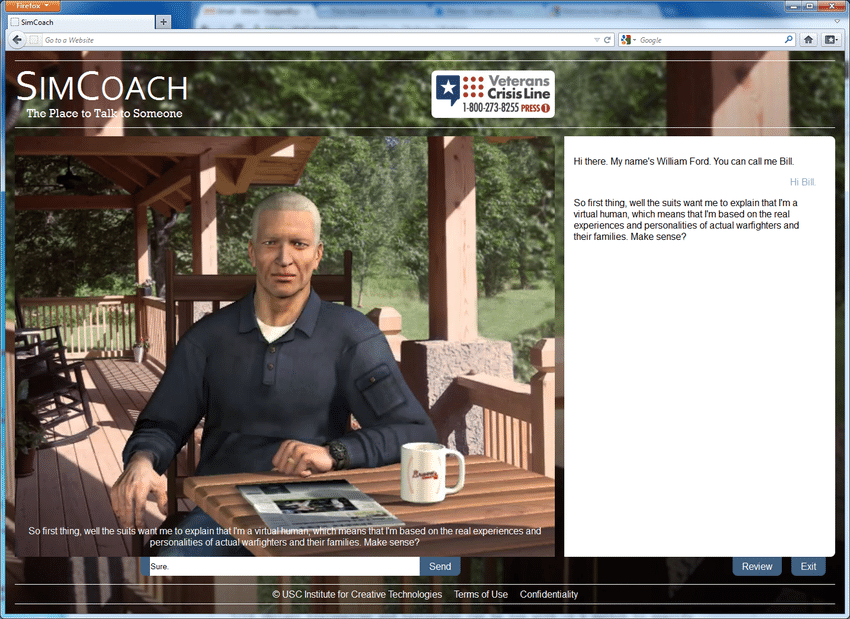
SimCoach was a virtual human research project developed at USC's Institute for Creative Technologies under the leadership of Dr. Albert "Skip" Rizzo. The project explored how conversational virtual humans could help military veterans access mental health resources and support services.
SimCoach Evaluation: A Virtual Human Intervention to Encourage Service-Member Help-Seeking for Posttraumatic Stress Disorder and Depression
Virtual Human Design for Veteran Mental Health Support
Before / After Comparison

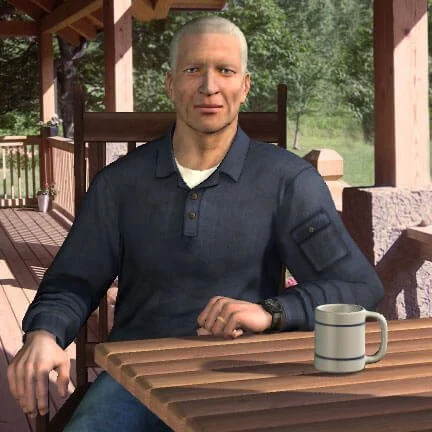
Redesigned the visual appearance and facial performance of a virtual human developed by USC's Institute for Creative Technologies to create a more approachable and trustworthy conversational experience for military veterans.
The Challenge
Create a virtual human that veterans would feel comfortable talking to about sensitive personal issues. The original character felt intimidating and emotionally distant, creating a barrier to trust and engagement.
My Contribution
Redesigned the character's appearance and visual presentation
Refined facial expressions and speech performance
Improved facial animation quality and believability
Collaborated with researchers and engineers to enhance character performance
The Transformation
Bill Ford evolved from a technical prototype into a virtual human that felt approachable, credible, and human.
Why It Matters
Technology can start the conversation.
Character design and appeal determine whether people want to continue it.